
Currently Empty: ₹0.00
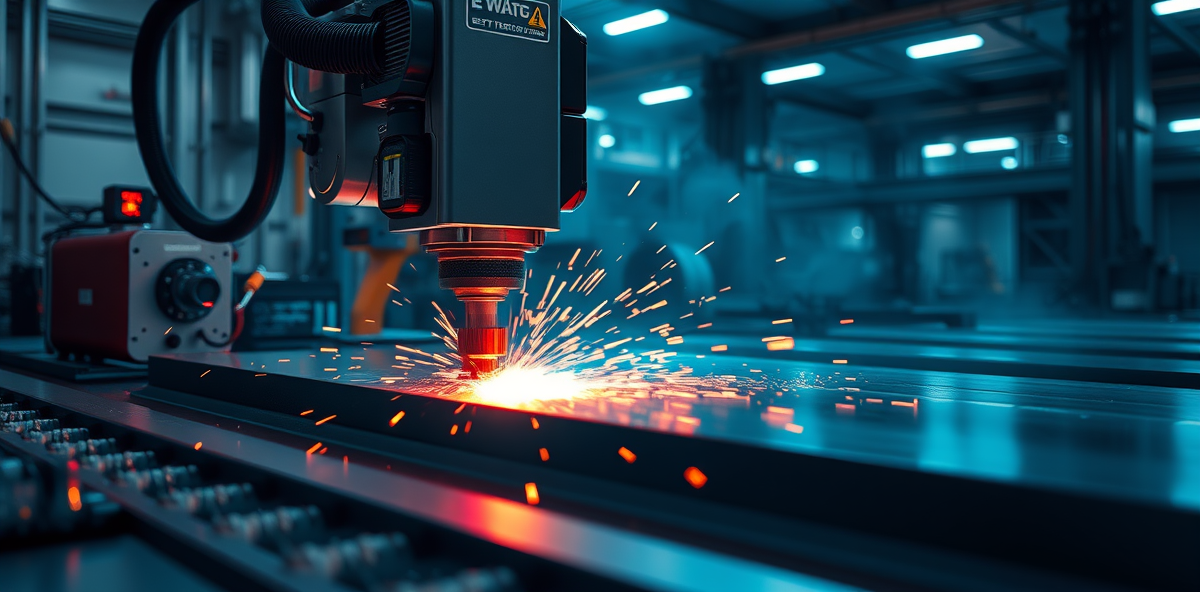
Elevating Precision: A Deep Dive into laser welding machine Manufacturers in India
India’s manufacturing sector is undergoing a profound transformation, driven by an imperative for higher precision, greater efficiency, and superior product quality. As industries strive to meet global standards and enhance their competitiveness, the adoption of advanced fabrication technologies has become crucial. Among these, the laser welding machine stands out as a game-changer, revolutionizing how various materials are joined.
This comprehensive guide explores the landscape of laser welding machine technology and its impact on Indian manufacturing. We will delve into the technical aspects, diverse applications, and significant benefits this innovation brings. Furthermore, we will equip you with essential considerations for choosing the right equipment, understand the importance of maintenance, and peer into the future of this pivotal technology, helping engineers, factory owners, and manufacturing companies make informed decisions.
What is Fiber Laser Welding Technology?
Fiber laser welding is an advanced material joining process that utilizes a highly concentrated beam of light generated by a fiber laser. This beam is directed onto the workpieces, rapidly heating and melting the material at the point of contact. The molten material then fuses together, creating a strong, precise, and durable weld.
Unlike traditional welding methods such as TIG or MIG, fiber laser welding offers unparalleled control over the heat input and weld penetration. This precision minimizes distortion, reduces the heat-affected zone (HAZ), and ensures consistent, high-quality joints. The inherent stability and efficiency of fiber lasers make them ideal for demanding industrial applications.
The core principle involves light amplification within an optical fiber, allowing for a highly focused and coherent beam. This technology is closely related to fiber laser cutting, where the same high-power laser sources are adapted for different material processing needs. The versatility and robustness of fiber laser systems are why they are rapidly becoming the preferred choice across various manufacturing segments in India.
Diverse Applications of Laser Welding Machines in Indian Manufacturing
The versatility of the laser welding machine has led to its widespread adoption across numerous industrial sectors in India. Its ability to perform high-speed, high-precision welds on a variety of materials makes it indispensable for modern production lines.
- Automotive Industry: From chassis components and body-in-white structures to intricate sensor housings and battery packs for electric vehicles, laser welding ensures lightweight, strong, and corrosion-resistant joints. This is crucial for improving fuel efficiency and vehicle safety.
- Aerospace and Defense: For critical components requiring exceptional strength-to-weight ratios and stringent quality standards, laser welding is ideal. It’s used in engine parts, airframe structures, and satellite components, often involving exotic alloys.
- Medical Device Manufacturing: The precision and minimal heat input of laser welding are vital for fabricating medical implants, surgical instruments, and prosthetic devices. Sterility and biocompatibility are maintained due to the clean welding process.
- Electronics and Microelectronics: In the production of sensitive electronic components, connectors, and micro-switches, laser welding offers the precision needed to join miniature parts without damaging surrounding circuitry.
- Jewelry and Decorative Items: For intricate designs and delicate materials, laser welding provides clean, virtually invisible seams, preserving the aesthetic integrity of high-value items.
- General Fabrication and Sheet Metal Work: Beyond specialized industries, laser welding is increasingly used in general fabrication shops for joining sheet metal laser cutting parts, enclosures, and various structural components, offering faster production and superior finish.
- Energy Sector: In the manufacturing of components for renewable energy systems, such as solar panels and battery storage units, laser welding provides efficient and reliable connections.
Key Benefits of Adopting Laser Welding Technology
Investing in a laser welding machine offers a multitude of operational and economic advantages that significantly enhance manufacturing capabilities and competitiveness.
- Unmatched Precision and Accuracy: Laser welding delivers extremely fine and accurate welds, enabling the joining of small or complex parts with very tight tolerances. This precision is critical in industries like medical devices and electronics.
- Minimal Heat-Affected Zone (HAZ): The highly localized heat input of laser welding reduces the HAZ, preventing material distortion, discoloration, and changes in metallurgical properties. This preserves the integrity and performance of the workpiece.
- High Welding Speed: Laser welding processes are significantly faster than traditional methods, leading to higher production throughput and reduced manufacturing cycle times. This directly translates to increased profitability.
- Strong and Clean Welds: Laser welds are characterized by their high strength and smooth, aesthetically pleasing finish. They often require minimal to no post-processing, saving time and labor costs.
- Versatility Across Materials: A laser welding machine can effectively join a wide range of metals, including stainless steel, aluminum, titanium, copper, and various alloys, sometimes even dissimilar metals.
- Automation Capabilities: Laser welding is highly amenable to automation and robotic integration, allowing for consistent quality, reduced human error, and continuous operation in high-volume production environments.
- Reduced Consumables: Compared to traditional welding, laser welding often requires fewer or no consumables like filler wire or shielding gases, leading to lower operating costs and a cleaner working environment.
- Improved Joint Quality: The deep penetration and narrow weld beads achieved by laser welding result in superior joint quality, enhancing the structural integrity and longevity of the manufactured products.
How to Choose the Right Laser Welding Equipment for Your Business
Selecting the appropriate laser welding machine is a critical decision that impacts your production efficiency, product quality, and long-term profitability. Careful consideration of several factors is essential.
- Material Type and Thickness: The type of materials you primarily work with (e.g., stainless steel, aluminum, copper) and their thicknesses will dictate the required laser power and wavelength. Different materials absorb laser energy differently.
- Required Welding Speed and Throughput: Assess your production volume and desired welding speed. Higher throughput demands more powerful and often more automated systems.
- Level of Automation: Decide between manual handheld systems for flexibility, semi-automatic systems for batch production, or fully automated robotic cells for high-volume, repetitive tasks. Automation significantly boosts consistency and speed.
- Beam Quality and Spot Size: A higher beam quality allows for a smaller, more focused spot size, leading to finer welds and greater precision. This is crucial for micro-welding or intricate designs.
- Cooling System: Ensure the cooling system is robust enough for your operational demands, especially for continuous-wave lasers used in high-power applications.
- Safety Features: Prioritize machines equipped with comprehensive safety interlocks, laser-safe enclosures, and eye protection protocols to ensure operator safety.
- Software and Controls: Evaluate the user-friendliness and capabilities of the machine’s control software. Advanced software offers greater control over welding parameters and can integrate with CAD/CAM systems.
- After-Sales Support and Service: Choose a manufacturer or supplier with a strong reputation for reliable customer service, technical support, spare parts availability, and training programs. Downtime can be very costly.
- Budget and ROI: While initial investment is a factor, focus on the long-term return on investment (ROI) considering operational costs, labor savings, and quality improvements.
Why Choose Lemon Laser for Your Laser Welding Needs?
In the competitive landscape of industrial machinery, choosing a reliable partner is as important as selecting the right technology. Lemon Laser stands out as a premier manufacturer of advanced laser solutions, committed to empowering Indian industries with cutting-edge laser welding machine technology.
At Lemon Laser, we understand the unique challenges and demands of modern manufacturing. Our extensive range of laser welding machine systems is engineered with precision, reliability, and performance at its core. We leverage the latest advancements in fiber laser technology to deliver solutions that offer superior weld quality, high operational efficiency, and long-term durability. Our machines are designed to seamlessly integrate into diverse production environments, from small-scale workshops to large industrial facilities.
We pride ourselves on not just providing equipment, but complete solutions. Our expert team offers comprehensive support, including pre-sales consultation to help you identify the ideal machine for your specific applications, thorough installation and training, and responsive after-sales service. We ensure that our clients are fully equipped to maximize the potential of their investment. With Lemon Laser, you gain a partner dedicated to your success, offering innovative technology and unwavering support for your laser welding machine requirements, alongside expertise in laser cutting machine solutions.
Essential Maintenance and Operational Tips for Laser Welding Machines
To ensure the longevity, optimal performance, and consistent output of your laser welding machine, regular maintenance and adherence to best operational practices are paramount. Neglecting these aspects can lead to costly downtime and diminished weld quality.
- Regular Cleaning of Optics: Dust, debris, and spatter can degrade optical components like lenses and protective windows. Clean them regularly with appropriate cleaning materials and techniques recommended by the manufacturer to maintain beam quality and prevent power loss.
- Check Gas Purity and Flow: If your system uses shielding gases, ensure the gas supply is pure and the flow rates are correctly set. Impurities can lead to porous welds and contamination.
- Maintain the Cooling System: The chiller or cooling system is vital for dissipating heat from the laser source and optics. Regularly check coolant levels, filter cleanliness, and ensure proper circulation to prevent overheating and damage.
- Software and Firmware Updates: Keep the machine’s operating software and firmware updated as recommended by the manufacturer. Updates often include performance enhancements, new features, and bug fixes.
- Operator Training and Safety: Ensure all operators are thoroughly trained on machine operation, maintenance procedures, and, critically, laser safety protocols. Always use appropriate personal protective equipment (PPE).
- Preventative Maintenance Schedule: Establish and adhere to a preventative maintenance schedule. This includes routine inspections of cables, connectors, motion systems, and alignment checks to catch potential issues before they cause significant problems.
- Check Nozzles and Contact Tips: For systems using contact tips or nozzles, regularly inspect them for wear or blockage. Worn parts can affect gas delivery and weld quality.
The Future of Laser Technology in Manufacturing
The trajectory of laser technology in manufacturing, particularly for applications like laser welding machine and laser cutting machine, points towards even greater sophistication, integration, and efficiency. As Industry 4.0 paradigms take hold, lasers are poised to play an even more central role.
Expect to see increased integration with Artificial Intelligence (AI) and Machine Learning (ML). These technologies will enable predictive maintenance, real-time quality control, and adaptive welding parameters, optimizing processes autonomously. The synergy of robotics with laser systems will also advance, leading to more flexible and intelligent automation solutions for complex manufacturing tasks.
Further developments in laser sources themselves, such as ultra-fast pulsed lasers and new wavelength options, will unlock the ability to weld an even wider array of challenging materials with enhanced precision and minimal heat input. There will be a continued push for more energy-efficient and compact laser systems, reducing operational costs and environmental impact.
The growth of additive manufacturing (3D printing) will also benefit from laser advancements, as lasers are central to many metal 3D printing processes. This convergence will foster hybrid manufacturing solutions where laser welding can post-process or repair additively manufactured parts, expanding possibilities across various sectors including metal laser cutting components. The future promises a manufacturing landscape where laser technology is not just a tool, but an intelligent, integrated component of the entire production ecosystem.
Conclusion
The journey of India’s manufacturing sector towards global leadership is intrinsically linked to its adoption of advanced technologies like the laser welding machine. This powerful tool offers an unparalleled combination of precision, speed, and versatility, enabling industries to produce higher quality products with greater efficiency and reduced costs. From automotive to aerospace, and medical devices to general fabrication, laser welding is proving to be a transformative force.
By understanding the technology, its myriad applications, and the critical factors in choosing and maintaining equipment, Indian manufacturers can strategically leverage laser welding to gain a significant competitive edge. Partnering with experienced providers like Lemon Laser ensures access to not only cutting-edge machinery but also the expertise and support needed to thrive in this evolving industrial landscape. Embrace the future of fabrication, embrace the power of laser welding.

