Currently Empty: ₹0.00
March 13, 2026
0 Comments
Introduction
Fiber Laser Cutting Machines have revolutionized the landscape of modern manufacturing, offering unparalleled precision, speed, and versatility in material processing. For engineers, factory owners, and manufacturing companies, understanding the intricacies of how fiber Laser Cutting Machines work is crucial for optimizing production processes and achieving superior results. This advanced technology has become indispensable across various industries, from automotive to aerospace, enabling the creation of complex parts with exceptional accuracy.
This comprehensive guide delves into the core principles of fiber laser technology, explains the detailed process of fiber laser cutting machine working, explores its diverse applications, and highlights the numerous benefits it offers. We will also compare it with traditional cutting methods, provide essential buying considerations, and offer maintenance tips, ultimately looking towards the future of this transformative technology in industrial settings. Mastering the capabilities of fiber laser cutting is key to staying competitive in today’s demanding manufacturing environment.
What is Fiber Laser Technology?
Fiber laser technology represents a significant leap forward in solid-state laser systems. Unlike traditional gas or crystal lasers, a fiber laser generates and delivers its beam through an optical fiber doped with rare-earth elements, such as ytterbium. This unique design allows for an extremely compact and robust system that requires minimal maintenance.
The process begins with a “seed laser” that produces a low-power beam. This beam is then directed into an optical fiber, where it is amplified by energy from pump diodes. The light travels within the fiber, repeatedly bouncing off its internal surfaces, leading to an intensified and highly coherent laser beam. This method ensures exceptional beam quality and efficiency, crucial for effective fiber laser cutting.
How Fiber Laser Cutting Machines Work: A Detailed Breakdown
Understanding the precise mechanism of a fiber Laser Cutting Machine is fundamental to appreciating its capabilities. The process involves several interconnected stages, all orchestrated to deliver an accurate and clean cut through various materials, especially in metal laser cutting applications.
1. Beam Generation and Delivery
As described, the laser beam is generated within the optical fiber. Once amplified to the desired power, this highly concentrated beam is guided through a flexible delivery fiber to the cutting head. This fiber optic delivery system is remarkably efficient, minimizing power loss and allowing for flexible machine layouts.
2. Focusing the Beam
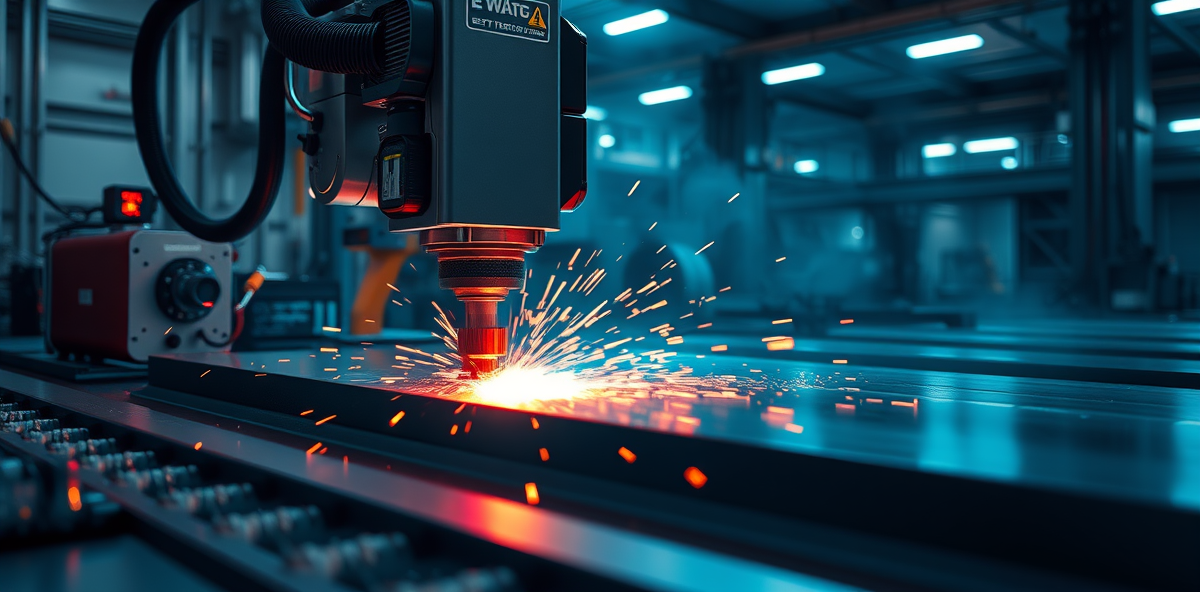
Upon reaching the cutting head, the laser beam passes through a series of focusing lenses. These lenses converge the beam into an incredibly small, high-intensity spot, often with a diameter as fine as a human hair. This concentrated energy density is critical for initiating the cutting process, creating an extremely powerful and precise point of interaction with the material surface.
3. Material Interaction
When the focused laser beam strikes the workpiece, its immense energy density rapidly heats the material to its melting or vaporization point. For most metal laser cutting applications, the material melts. The molten material is then swiftly expelled from the kerf (the cut line) by a high-pressure assist gas, creating a clean separation.
4. Role of Assist Gas
Assist gas, typically oxygen, nitrogen, or compressed air, plays a vital role in the cutting process. In oxygen cutting, the oxygen reacts exothermically with the molten metal, increasing the cutting speed and creating a slightly oxidized edge. Nitrogen cutting, on the other hand, provides a clean, oxide-free edge, ideal for materials where surface quality is paramount. Compressed air can also be used for certain materials, offering a cost-effective solution.
5. The Cutting Head and Nozzle
The cutting head houses the focusing optics and the nozzle. The nozzle directs the assist gas coaxially with the laser beam onto the workpiece. The distance between the nozzle and the material, known as the stand-off distance, is precisely controlled to ensure optimal gas flow and effective molten material expulsion, directly influencing cut quality and efficiency.
The continuous movement of the cutting head, guided by a sophisticated CNC (Computer Numerical Control) system, allows the focused laser beam to trace the desired cutting path. This intricate coordination between beam generation, delivery, focusing, material interaction, and assist gas management ensures the high precision and speed characteristic of fiber laser cutting machine working.
Applications of Fiber Laser Cutting
The versatility of fiber laser cutting has made it an indispensable tool across a vast spectrum of industrial applications. Its ability to process a wide range of materials with exceptional accuracy makes it a preferred choice for numerous manufacturing tasks.
- Automotive Industry: From chassis components to intricate engine parts and interior trim, fiber lasers cut various metals with the precision required for modern vehicle manufacturing. This includes high-strength steels and aluminum alloys.
- Aerospace Sector: The aerospace industry demands absolute precision and reliability. Fiber lasers are used to cut lightweight, high-performance materials like titanium, Inconel, and specialized aluminum alloys for aircraft components, ensuring structural integrity and weight reduction.
- Medical Device Manufacturing: Producing small, complex, and sterile components for medical instruments, implants, and surgical tools requires extreme accuracy. Fiber laser cutting provides the necessary precision for these critical applications, often dealing with materials like stainless steel and nitinol.
- Electronics Industry: For delicate electronic components and enclosures, fiber lasers offer precise cutting of thin metals and other materials without causing thermal damage to sensitive parts.
- General Fabrication and Sheet Metal Work: Fabricators utilize fiber lasers for cutting everything from mild steel and stainless steel to aluminum and brass for various construction, architectural, and industrial machinery components.
- Jewelry and Decorative Arts: The fine beam and high precision allow for intricate designs and delicate cuts in precious metals, creating detailed jewelry pieces and decorative elements.
The capability of fiber laser cutting to handle both thin sheets and thick plates, combined with its accuracy for complex geometries, firmly establishes its critical role in modern metal laser cutting operations across diverse industries.
Benefits of Fiber Laser Cutting Machines
Investing in a fiber Laser Cutting Machine offers a multitude of advantages that significantly enhance productivity, reduce costs, and improve product quality for manufacturing businesses.
- High Precision and Accuracy: Fiber lasers produce an extremely fine and focused beam, resulting in tight tolerances and exceptional edge quality. This minimizes or eliminates the need for secondary finishing operations.
- Superior Cutting Speed: Especially for thin to medium-thickness metals, fiber laser cutting machines operate at significantly higher speeds compared to other cutting technologies. This leads to increased throughput and shorter lead times.
- Low Operational Costs: Fiber lasers are remarkably energy-efficient, converting a high percentage of electrical input into laser output. They also have fewer consumable parts and longer lifespans for components, leading to reduced maintenance costs and overall lower operating expenses.
- Versatility Across Materials: These machines can effectively cut a wide range of ferrous and non-ferrous metals, including highly reflective materials like copper, brass, and aluminum, which are challenging for other laser types.
- Minimal Heat-Affected Zone (HAZ): The concentrated energy and rapid cutting speed of fiber lasers create a very small HAZ. This reduces material distortion and preserves the metallurgical properties of the workpiece, ensuring component integrity.
- Automation Compatibility: Fiber laser systems are easily integrated into automated production lines and robotic cells, enabling continuous, unattended operation and further boosting efficiency.
- Excellent Cut Quality: The resulting cuts are typically smooth, burr-free, and precise, requiring little to no post-processing. This not only saves time but also improves the aesthetic and functional quality of the finished parts.
These benefits collectively contribute to a strong return on investment for companies adopting fiber laser cutting technology, solidifying its position as a cornerstone of advanced manufacturing.
Comparison with Traditional Cutting and Welding
To fully appreciate the advancements of fiber laser technology, it’s essential to compare its capabilities against both traditional cutting methods and its related application in Laser Welding Machines.
Fiber Laser Cutting vs. Traditional Cutting Methods
- CO2 Laser Cutting: While CO2 lasers are effective, especially for thicker non-metals and very thick metals, fiber lasers offer superior speed for thin to medium metals, higher energy efficiency, and better capability for cutting reflective materials like copper and brass due to a shorter wavelength. Fiber lasers also have a more compact footprint and lower maintenance.
- Plasma Cutting: Plasma cutting is robust and excellent for thick metals, but it generally produces a wider kerf, a larger HAZ, and a rougher cut edge compared to fiber laser cutting. Fiber lasers offer significantly higher precision and better edge quality.
- Waterjet Cutting: Waterjet cutting can handle almost any material and produces no HAZ, but it is typically much slower than fiber laser cutting, especially for metals. It also involves abrasive garnet disposal and potentially higher operational costs.
- Mechanical Cutting (e.g., Shearing, Punching): These methods are fast for simple cuts and holes but lack the flexibility and intricate cutting capabilities of fiber lasers. They also involve tool wear and can induce material distortion. Fiber lasers eliminate tooling costs and provide limitless design flexibility.
Fiber Laser Technology and Welding
While this article focuses on cutting, it’s worth noting that the same core fiber laser technology is also the engine behind advanced Laser Welding Machines. Compared to traditional welding processes like MIG or TIG, fiber laser welding offers:
- High Speed and Efficiency: Much faster welding speeds, leading to increased productivity.
- Minimal Heat Input and Distortion: The focused beam creates narrow, deep welds with very small HAZ, reducing material distortion and warping.
- Deep Penetration and Strong Welds: Capable of creating deep, strong welds with excellent metallurgical properties.
- Automation Potential: Easily integrated into automated systems for consistent, repeatable welds.
Both fiber laser cutting and welding exemplify the advantages of focused energy for precision material processing, showcasing the technological prowess of fiber optics in manufacturing.
How to Choose the Right Laser Equipment
Selecting the appropriate fiber Laser Cutting Machine is a critical decision that impacts productivity, cost-efficiency, and output quality. Careful consideration of several factors is essential for making an informed investment.
- Power Requirements (Wattage): This is perhaps the most crucial factor. The required laser power (e.g., 1kW to 30kW+) depends on the type and thickness of the materials you intend to cut, as well as the desired cutting speed. Higher power generally means faster cutting and the ability to cut thicker materials.
- Machine Size and Axis Configuration: Consider the size of your typical workpieces and available floor space. Machines come in various bed sizes (e.g., 3m x 1.5m, 4m x 2m) and configurations (e.g., 2D for flat sheets, 3D for tubes and profiles).
- Beam Quality and Focusability: A higher beam quality (M² value closer to 1) allows for a smaller spot size and a more precise, cleaner cut. This is particularly important for intricate designs and very thin materials.
- Software and Control System: Evaluate the user-friendliness and capabilities of the CNC software. Features like nesting optimization, remote diagnostics, and CAD/CAM integration can significantly improve efficiency and ease of operation.
- Manufacturer Reputation and Support: Choose a reputable manufacturer known for quality, reliability, and excellent after-sales service. Access to training, technical support, and spare parts is vital for long-term operational success.
- Budget and Return on Investment (ROI): While initial investment can be substantial, factor in operational costs, maintenance, and the potential for increased productivity and reduced waste. Calculate the ROI based on your specific production needs.
- Safety Features: Ensure the machine complies with all relevant safety standards. Look for features such as enclosed workspaces, interlocks, emergency stops, and fume extraction systems to protect operators.
A thorough assessment of these considerations will help you select a fiber Laser Cutting Machine that perfectly aligns with your manufacturing goals and optimizes the process of fiber laser cutting machine working for your specific needs.
Maintenance and Operational Tips
Proper maintenance and adherence to operational best practices are paramount to ensuring the longevity, optimal performance, and safety of a fiber Laser Cutting Machine. Regular care minimizes downtime and maximizes productivity.
- Regular Cleaning of Optics: The focusing lens and protective window (cover slide) are critical components. Dust, debris, and spatter can degrade beam quality and cause overheating. Clean them regularly with specified optical cleaning solutions and wipes.
- Check Nozzle Condition: Inspect the nozzle for wear, damage, or buildup. A worn or damaged nozzle can lead to poor cut quality and inefficient gas flow. Replace as needed.
- Verify Assist Gas Purity and Pressure: Impure assist gas can contaminate optics and affect cut quality. Ensure gas lines are clean and that gas pressure settings are correct for the material and thickness being cut.
- Maintain Cooling System: The chiller maintains the laser source and cutting head at optimal temperatures. Regularly check the coolant level and quality, and clean the chiller’s filters and condenser coils.
- Lubricate Moving Parts: Follow the manufacturer’s guidelines for lubricating linear guides, ball screws, and other moving components to ensure smooth and accurate machine movement.
- Software Updates: Keep the machine’s control software updated to benefit from performance improvements, new features, and bug fixes.
- Operator Training and Safety Protocols: Ensure all operators are thoroughly trained on machine operation, maintenance, and safety procedures. Always wear appropriate personal protective equipment (PPE), including laser safety glasses.
- Environmental Control: Maintain a stable workshop environment. Control temperature, humidity, and airborne dust to protect sensitive electronic components and optics.
By implementing a proactive maintenance schedule and adhering to these operational tips, manufacturers can significantly extend the lifespan of their fiber Laser Cutting Machine and consistently achieve high-quality results, ensuring efficient fiber laser cutting machine working.
Future of Laser Technology in Manufacturing
The trajectory of laser technology in manufacturing points towards continuous innovation, further cementing its role as a cornerstone of advanced industrial processes. The future promises even greater efficiency, integration, and versatility.
- Enhanced Power and Efficiency: Research and development are continuously pushing the boundaries of laser power, enabling faster processing of thicker and more challenging materials. Concurrently, efforts are focused on improving the electrical-to-optical conversion efficiency, reducing energy consumption further.
- Advanced Beam Shaping and Adaptive Optics: Future systems will feature more sophisticated beam shaping capabilities, allowing for dynamic adjustment of the laser spot size and intensity profile. Adaptive optics will compensate for thermal distortions and material variations in real-time, leading to even greater precision and consistency in fiber laser cutting.
- Integration with Industry 4.0 and AI: Laser cutting machines will become more deeply integrated into the smart factory ecosystem. IoT sensors will provide real-time operational data, while AI algorithms will optimize cutting parameters, predict maintenance needs, and manage production schedules autonomously. This will lead to highly optimized and self-correcting manufacturing systems.
- Hybrid Manufacturing Processes: The trend towards hybrid manufacturing will see fiber laser cutting and Laser Welding Machines combined with additive manufacturing (3D printing) and traditional subtractive methods. This will enable the creation of highly complex parts with tailored properties in a single setup.
- New Material Processing Capabilities: As laser technology evolves, it will unlock the ability to precisely cut and process an even wider array of advanced materials, including composites, ceramics, and superalloys, which are critical for emerging industries.
- Sustainability and Eco-Friendliness: Future developments will focus on making laser processes even more environmentally friendly, with reduced energy consumption, minimal waste generation, and the potential for closed-loop material recycling.
These advancements ensure that fiber laser technology will remain at the forefront of manufacturing innovation, continually setting new benchmarks for precision, speed, and intelligence in metal laser cutting and beyond.
Conclusion
Fiber Laser Cutting Machines stand as a testament to innovation in industrial technology, fundamentally reshaping how manufacturers approach material processing. Their ability to deliver exceptional precision, rapid cutting speeds, and cost-effective operation makes them an invaluable asset for businesses aiming to enhance their productivity and product quality.
From understanding the sophisticated mechanics of how fiber laser cutting machines work to exploring their extensive applications and undeniable benefits, it’s clear that this technology offers a compelling solution for a wide array of manufacturing challenges. By carefully considering buying factors and committing to proper maintenance, companies can unlock the full potential of their fiber laser investment.
As we look to the future, the continuous evolution of fiber laser technology, driven by advancements in automation, AI, and material science, promises even greater capabilities. Embracing this technology is not just about adopting a new tool; it’s about investing in a future where manufacturing is more precise, efficient, and innovative than ever before. Fiber laser cutting is truly defining the cutting edge of industrial fabrication.