
Currently Empty: ₹0.00
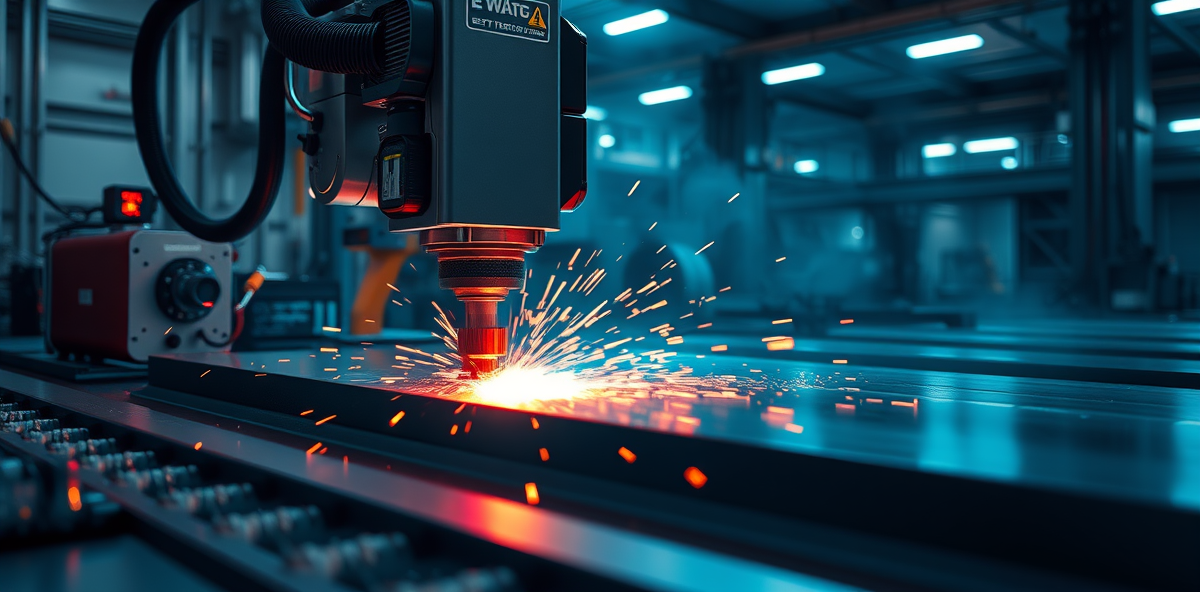
Unlocking Precision and Efficiency: The Power of Smart Laser Welding Systems
\n\n
In the rapidly evolving landscape of modern manufacturing, the demand for unparalleled precision, speed, and automation continues to escalate. Industries worldwide are seeking advanced solutions to optimize their production processes, reduce costs, and maintain a competitive edge. This pursuit has led to the emergence of smart laser welding systems, a revolutionary technology that is redefining the capabilities of material joining. These sophisticated systems move beyond traditional welding methods, integrating cutting-edge intelligence to deliver superior results with unprecedented consistency.
\n\n
Smart laser welding systems represent a significant leap forward, blending the inherent advantages of laser technology with the power of artificial intelligence, machine vision, and advanced automation. They are designed to address complex manufacturing challenges, offering solutions for intricate geometries, diverse material combinations, and high-volume production requirements. For engineers, factory owners, and manufacturing companies, understanding the nuances and potential of these systems is crucial for future-proofing operations and unlocking new levels of productivity and quality.
\n\n
What are Smart Laser Welding Systems?
\n\n
Smart laser welding systems are advanced manufacturing solutions that leverage laser technology for joining materials, enhanced by integrated sensors, machine vision, artificial intelligence (AI), and sophisticated control algorithms. Unlike conventional laser welding, which relies heavily on pre-programmed parameters and operator expertise, smart systems can adapt, learn, and optimize welding processes in real-time.
\n\n
These systems are characterized by their ability to monitor the welding process continuously, detect anomalies, and make instantaneous adjustments to parameters such as laser power, focus, and travel speed. This intelligent feedback loop ensures consistent weld quality, reduces defects, and minimizes the need for manual intervention. They represent a fusion of precision optics, robust robotics, and intelligent software, creating a highly efficient and reliable joining platform.
\n\n
Core Components of Smart Laser Welding
\n
- \n
- High-Power Laser Sources: Typically Laser Cutting Machine or disc lasers, offering precise energy delivery.
- Advanced Optics and Beam Delivery Systems: For shaping, focusing, and guiding the laser beam with extreme accuracy.
- Robotic or Gantry Systems: Providing precise positioning and movement of the laser head or workpiece.
- Machine Vision Systems: High-resolution cameras and image processing software for real-time seam tracking, defect detection, and quality control.
- Sensor Integration: Including pyrometers, spectrometers, and acoustic sensors to monitor process temperature, plasma characteristics, and other critical welding parameters.
- Artificial Intelligence and Machine Learning Modules: Analyzing sensor data, learning from previous welds, and predicting optimal parameters for different materials and joint configurations.
- Sophisticated Control Software: Orchestrating all components, managing data, and enabling adaptive process control.
\n
\n
\n
\n
\n
\n
\n
\n\n
The Evolution of Laser Welding
\n\n
Laser welding has been a staple in high-precision manufacturing for decades, offering advantages over traditional arc welding methods, such as minimal heat-affected zones, high welding speeds, and the ability to join dissimilar materials. Early Laser Welding Machine relied on fixed parameters, requiring extensive trial and error for process optimization.
\n\n
The transition to “smart” systems marks a significant evolution. Where traditional laser welding offered precision, smart systems add intelligence, making the process more robust, efficient, and adaptable. This evolution is critical for industries demanding zero defects and maximum throughput, especially in complex assembly lines where human intervention can be costly and time-consuming.
\n\n
Key Technologies Powering Smart Laser Welding
\n\n
The “smart” aspect of these systems is derived from the seamless integration of several advanced technologies, each playing a crucial role in enhancing performance and reliability.
\n\n
Machine Vision and Sensor Integration
\n
Machine vision systems are the “eyes” of smart laser welding. They precisely locate seam positions, measure gap tolerances, and verify component alignment before and during the welding process. High-speed cameras capture images of the weld pool and surrounding area, providing critical feedback.
\n
Accompanying these, various sensors monitor thermal emissions, plasma plume characteristics, and acoustic signatures. This real-time data collection allows the system to build a comprehensive picture of the welding environment and the quality of the joint being formed.
\n\n
Artificial Intelligence and Machine Learning
\n
AI and ML algorithms are the “brains” of smart welding systems. They process the vast amounts of data collected by vision systems and sensors, identifying patterns and deviations from optimal welding conditions. These algorithms can learn from successful welds and apply that knowledge to new, similar tasks, continuously improving performance.
\n
This capability allows the system to predict potential issues and adjust parameters proactively, preventing defects before they occur. It also facilitates rapid setup for new parts, significantly reducing engineering time and material waste during prototyping.
\n\n
Advanced Robotics and Automation
\n
High-precision robots and gantry systems provide the dexterity and speed required for complex welding tasks. Collaborative robots (cobots) are increasingly integrated, allowing for safer human-robot interaction on the factory floor.
\n
Automation ensures consistent path accuracy and repeatability, crucial for achieving high-quality welds at production speeds. The integration with robotic platforms allows for welding in hard-to-reach areas and on intricate components that would be challenging or impossible with manual methods.
\n\n
Real-time Process Monitoring and Control
\n
The core of smart laser welding lies in its real-time feedback loop. Data from vision systems and sensors is fed instantly into the control software, which is powered by AI. If a deviation is detected – for example, a slight change in material thickness or a shift in joint alignment – the system immediately adjusts laser power, focus, or travel speed.
\n
This adaptive control ensures that optimal welding conditions are maintained throughout the entire process, leading to consistently high-quality welds and significantly reduced scrap rates. It is a fundamental shift from reactive quality control to proactive process management.
\n\n
Applications of Smart Laser Welding Systems
\n\n
Smart laser welding systems are incredibly versatile, finding application across a broad spectrum of industries where precision, reliability, and efficiency are paramount. Their ability to handle diverse materials and complex geometries makes them indispensable.
\n\n
- \n
- Automotive Industry: Used for lightweighting initiatives, joining advanced high-strength steels, aluminum alloys, and dissimilar materials in chassis, body-in-white, battery modules, and powertrain components. The precision helps in creating strong, aesthetically pleasing seams for vehicles.
- Aerospace Industry: Critical for joining high-performance alloys like titanium and nickel-based superalloys in aircraft structures, engine components, and satellite parts. The demand for flawless welds and minimal material distortion is met by smart systems.
- Medical Device Manufacturing: Essential for producing intricate and sterile components such as surgical instruments, implants, and pacemakers. The small heat-affected zone and clean welds are vital for biocompatibility and functionality.
- Electronics and Microelectronics: Used for precision joining of delicate components in sensors, connectors, and semiconductor packaging. The non-contact nature and fine spot size are ideal for miniature parts.
- Battery Manufacturing: Plays a crucial role in welding battery cells, modules, and packs for electric vehicles and energy storage systems. The need for precise, consistent, and highly conductive welds is perfectly addressed by smart laser welding.
- Heavy Machinery and Industrial Equipment: For robust and high-strength joining of thick sections and large components, ensuring durability and structural integrity.
- Jewelry and Consumer Goods: For delicate and aesthetically critical welds, providing strong, invisible joints on precious metals and complex designs.
\n
\n
\n
\n
\n
\n
\n
\n\n
Benefits of Adopting Smart Laser Welding
\n\n
The integration of smart laser welding systems offers a multitude of advantages that translate directly into improved operational performance and financial gains for manufacturing companies.
\n\n
Enhanced Precision and Quality
\n
With real-time monitoring and adaptive control, smart systems deliver welds of unparalleled quality and consistency. Defects such as porosity, spatter, and incomplete penetration are significantly reduced, leading to stronger, more reliable joints.
\n
The precision afforded by these systems minimizes distortion and heat-affected zones, preserving the material properties and aesthetic integrity of the components.
\n\n
Increased Production Efficiency
\n
Automation and faster processing speeds dramatically increase throughput. The ability to handle complex tasks with minimal human intervention allows for continuous operation, reducing bottlenecks and accelerating production cycles.
\n
Reduced scrap rates and rework contribute directly to higher efficiency, as fewer resources are wasted on defective parts.
\n\n
Cost Reduction
\n
By minimizing defects and rework, companies save on material costs, labor for inspection and repair, and production time. The optimized use of laser power and gases also contributes to lower operational expenses.
\n
Furthermore, the longevity of components welded by smart systems can reduce warranty claims and improve product reputation.
\n\n
Improved Safety
\n
Laser welding is a contained process, and automating it removes operators from direct exposure to intense light, fumes, and heat. This significantly enhances workplace safety, reducing the risk of injuries associated with manual welding.
\n\n
Flexibility and Adaptability
\n
Smart systems can be quickly reprogrammed and reconfigured to handle different part geometries, materials, and production runs. This flexibility is crucial for companies dealing with diverse product portfolios or frequent design changes.
\n
The AI component allows for faster adaptation to new welding scenarios, making the system more agile than static, pre-programmed setups.
\n\n
Data-Driven Decision Making
\n
The extensive data collected by smart welding systems provides valuable insights into process performance, material behavior, and potential areas for optimization. This data can be used for predictive maintenance, process improvement, and supply chain management.
\n
Manufacturers can gain a deeper understanding of their operations, leading to informed strategic decisions and continuous improvement initiatives.
\n\n
How Smart Laser Welding Compares to Traditional Welding Methods
\n\n
Compared to traditional arc welding methods like TIG (Tungsten Inert Gas) or MIG (Metal Inert Gas), smart laser welding offers distinct advantages. Arc welding often involves significant heat input, leading to larger heat-affected zones, more distortion, and slower speeds.
\n
Smart laser welding, on the other hand, provides concentrated energy, resulting in narrow, deep welds with minimal heat dispersion. This leads to higher precision, less distortion, and significantly faster processing. The automated nature also ensures repeatability that is difficult to achieve with manual arc welding.
\n\n
Choosing the Right Smart Laser Welding Equipment
\n\n
Selecting the appropriate smart laser welding system is a critical decision that requires careful consideration of various factors specific to your manufacturing needs and operational environment.
\n\n
Assessing Your Production Needs
\n
Begin by evaluating the materials you will be welding, their thicknesses, and the required weld geometries. Consider your production volume and desired cycle times. These factors will dictate the necessary laser power, beam quality, and system configuration.
\n
Understanding your current challenges, such as defect rates or throughput limitations, will help identify how a smart system can best address them.
\n\n
Understanding Laser Types
\n
Different laser sources are suitable for various applications. For instance, fiber lasers are highly efficient and versatile, excellent for precision welding of a wide range of metals, including those processed by Laser Cutting Machine. CO2 lasers are often used for thicker materials, while disc lasers combine high power with good beam quality. The choice impacts both performance and operating costs.
\n
The development of Laser Cutting Machine technology and the increasing adoption of Laser Cutting Machine for various industrial applications has also pushed the boundaries of what\’s possible in laser welding, allowing for more precise and faster processes, especially in the context of Laser Cutting Machine and metal fabrication.
\n\n
Integration Capabilities
\n
Consider how the smart laser welding system will integrate with your existing production line, robotic cells, and enterprise resource planning (ERP) systems. Seamless integration is vital for maximizing automation and data flow.
\n\p>Compatibility with material handling systems, vision inspection, and post-processing steps is also an important factor.
\n\n
Software and User Interface
\n
The intuitiveness and power of the system\’s software are paramount. Look for user-friendly interfaces that allow for easy programming, monitoring, and data analysis. The sophistication of the AI and machine learning algorithms will determine the system\’s adaptive capabilities.
\n\p>Robust data logging and reporting features are essential for quality assurance and continuous improvement.
\n\n
After-Sales Support and Training
\n
A reputable supplier will offer comprehensive training for your operators and maintenance staff. Excellent after-sales support, including technical assistance, spare parts availability, and service contracts, is crucial for long-term operational success.
\n\n
Why to Choose Lemon Laser
\n\n
When investing in advanced manufacturing technology like a smart Laser Welding Machine, choosing the right partner is as important as selecting the technology itself. A leading provider like Lemon Laser understands the intricate demands of industrial buyers, offering solutions that combine cutting-edge innovation with reliable performance.
\n
Lemon Laser prioritizes robust engineering and integration capabilities, ensuring that their smart laser welding systems seamlessly fit into existing production environments. They offer extensive expertise in diverse laser applications, including state-of-the-art Laser Cutting Machine technology and advanced solutions for Laser Cutting Machine for metal fabrication.
\n
Furthermore, a commitment to comprehensive customer support, including expert training and responsive technical assistance, is paramount. This ensures that manufacturers can maximize their investment, benefiting from consistent uptime and optimized welding processes tailored to their specific needs, from precision joining to robust Laser Cutting Machine applications.
\n\n
Maintenance and Operational Tips for Smart Laser Welding Systems
\n\n
Proper maintenance and operational practices are essential to ensure the longevity, efficiency, and consistent performance of smart laser welding systems.
\n\n
- \n
- Regular Calibration: Periodically calibrate all sensors, vision systems, and robotic components to maintain accuracy and repeatability.
- Software Updates: Keep the system\’s software, including AI and machine learning modules, updated to benefit from the latest improvements and security patches.
- Optics Cleaning: Regularly inspect and clean protective windows, focusing lenses, and beam delivery optics according to manufacturer guidelines to prevent power loss and beam degradation.
- Cooling System Checks: Ensure the cooling system for the laser source and other components is functioning correctly and maintain optimal coolant levels and purity.
- Gas Management: Monitor the purity and flow rate of shielding gases, as these directly impact weld quality and the cleanliness of the optics.
- Preventive Maintenance Schedule: Adhere strictly to the manufacturer\’s recommended preventive maintenance schedule for all mechanical and electrical components.
- Operator Training and Safety Protocols: Ensure all operators are thoroughly trained on system operation, programming, troubleshooting, and, most importantly, laser safety procedures, including proper use of PPE and laser-safe enclosures.
\n
\n
\n
\n
\n
\n
\n
\n\n
The Future of Laser Technology in Manufacturing
\n\n
The trajectory of laser technology in manufacturing points towards even greater intelligence, integration, and versatility. Smart laser welding systems are at the forefront of this evolution, continuously pushing the boundaries of what is possible.
\n
Future developments will likely include more advanced AI for predictive maintenance and self-optimization, enabling systems to anticipate failures and adjust processes without human intervention. The integration of augmented reality (AR) for maintenance and training will also become more common.
\n
Further advancements in Laser Cutting Machine and high-power laser sources will continue to improve speed and the ability to process challenging materials. As manufacturing shifts towards industry 4.0 and beyond, smart laser systems, including advanced Laser Cutting Machine for efficient metal laser cutting and sophisticated Laser Welding Machine, will be central to creating highly flexible, efficient, and sustainable production environments, impacting everything from material processing like Laser Cutting Machine to complex assemblies.
\n\n
Conclusion
\n\n
Smart laser welding systems are transforming the manufacturing landscape, offering an unparalleled combination of precision, efficiency, and adaptability. By integrating advanced laser technology with artificial intelligence, machine vision, and automation, these systems empower manufacturers to achieve superior weld quality, significantly reduce operational costs, and accelerate production cycles. From the intricate demands of medical devices to the robust requirements of the automotive and aerospace sectors, smart laser welding is proving to be an indispensable tool for a wide array of industrial applications.
\n
For manufacturers looking to embrace the future of advanced joining technologies, investing in a smart Laser Welding Machine represents a strategic move towards greater competitiveness and innovation. By carefully considering their specific needs and partnering with reputable suppliers, businesses can leverage these intelligent systems to unlock new levels of productivity, quality, and sustainable growth in the modern industrial era.

