
Currently Empty: ₹0.00
Introduction: The Dawn of Intelligent Manufacturing
The manufacturing sector is in the midst of a profound transformation, driven by the relentless pace of technological innovation. At the forefront of this revolution is Artificial Intelligence (AI), a game-changer that is redefining the capabilities and efficiency of industrial processes. Among the various machinery being revolutionized, the Laser Cutting Machine stands out as a prime example of AI’s transformative power.
For decades, Laser Cutting Machines have been indispensable tools for precision fabrication across countless industries. From intricate designs to robust components, their ability to cut a wide array of materials with unparalleled accuracy has made them cornerstones of modern production lines. Now, with AI integration, these machines are evolving from highly efficient tools into intelligent, self-optimizing systems, promising unprecedented levels of productivity, quality, and operational insight. This article will delve into how AI is fundamentally reshaping the landscape of laser cutting, offering invaluable insights for engineers, factory owners, and manufacturing companies looking to leverage these advanced capabilities.
Understanding Laser Cutting Machine Technology
What is Laser Cutting Machine Technology?
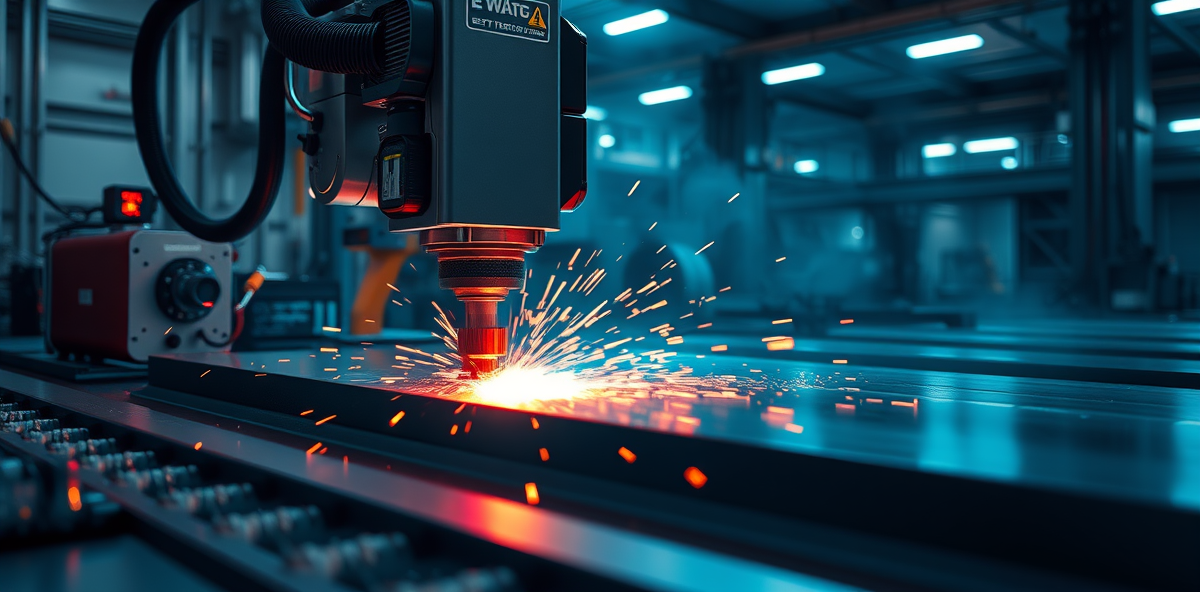
Laser Cutting Machine technology utilizes a focused, high-power laser beam to melt, burn, or vaporize material in its path, creating precise cuts and complex geometries. The process involves directing the laser beam through optics to a focal point on the material’s surface, where the concentrated energy performs the cutting action. An assist gas, such as oxygen or nitrogen, is often used to blow away molten material and protect the optics.
This non-contact process offers numerous advantages over traditional cutting methods, including superior edge quality, minimal material distortion, and the ability to process a vast range of materials. The evolution of laser sources, control systems, and material handling has steadily enhanced the capabilities of these essential machines.
The Rise of Fiber Laser Cutting
Among laser technologies, fiber laser cutting dominates modern manufacturing. Generating its beam within an optical fiber, it delivers high beam quality and exceptional efficiency. Fiber lasers offer significant advantages over traditional CO2 lasers in speed, energy consumption, and maintenance. They process reflective materials like copper and aluminum with greater ease and safety. Their compact design and longer diode life cycles contribute to lower operational costs and increased uptime, making fiber laser cutting a powerful and cost-effective solution.
Metal Laser Cutting: A Core Application
Metal laser cutting is a critical application of Laser Cutting Machine technology, vital for countless industries. It precisely cuts steel, stainless steel, aluminum, and various alloys, from thin sheets to thick plates. The speed and precision of modern metal laser cutting equipment are unmatched, enabling complex parts with tight tolerances. This is crucial for sectors like automotive, aerospace, and electronics, where high-quality, custom metal components are constantly in demand. AI integration further enhances these capabilities, optimizing material utilization and production efficiency for competitive advantage.
The Integration of Artificial Intelligence in Laser Cutting Machines
AI for Enhanced Precision and Quality
AI dramatically improves precision and cut quality in Laser Cutting Machines. Algorithms analyze real-time data from sensors monitoring laser power, temperature, gas flow, and cutting speed. Based on this, AI makes instantaneous parameter adjustments, ensuring consistent cut quality despite material inconsistencies or environmental changes. This intelligent feedback loop minimizes defects, reduces rework, and optimizes cutting paths for intricate designs. For critical applications requiring sub-millimeter accuracy, AI-driven Laser Cutting Machines offer unparalleled reliability and consistency, especially vital in fiber laser cutting.
Predictive Maintenance and Uptime Optimization
AI enhances uptime through advanced predictive maintenance. By continuously monitoring machine performance data—including vibration, temperature, and component wear—AI predicts potential equipment failures before they occur. This proactive approach optimizes maintenance schedules, allows parts to be ordered in advance, and facilitates repairs during planned downtimes. The result is a substantial reduction in unplanned outages, maximizing operational uptime for the Laser Cutting Machine and ensuring continuous production. This directly translates to increased profitability and improved overall equipment effectiveness (OEE).
Automated Design and Nesting Optimization
AI-powered software revolutionizes design and nesting, crucial for minimizing material waste in metal laser cutting. Advanced AI algorithms quickly analyze part geometries and generate optimal nesting patterns on a single sheet, maximizing material utilization beyond manual or traditional CAD capabilities. AI also assists in optimizing part designs for manufacturability, identifying cutting challenges pre-production. This front-end intelligence significantly reduces material scrap, lowers costs, and accelerates the overall product development cycle, enhancing the efficiency of the Laser Cutting Machine.
Smart Monitoring and Process Control
Modern AI-integrated Laser Cutting Machines utilize sophisticated sensors to collect vast operational data. AI interprets this data, providing smart monitoring and precise process control. It detects real-time anomalies, such as slight deviations in cut kerf or signs of nozzle wear, and can alert operators or even self-correct. This continuous vigilance ensures the machine operates within optimal parameters, maintaining consistent quality and preventing costly errors. For complex metal laser cutting operations, this intelligent oversight is invaluable for achieving repeatable, high-quality output.
Adaptive Learning and Continuous Improvement
A compelling aspect of AI in Laser Cutting Machines is its capacity for adaptive learning. AI systems learn from every cut, material processed, and operational scenario, continuously refining algorithms and improving performance. For instance, encountering a new alloy in fiber laser cutting, the AI analyzes parameters and results, storing data for future optimization. This self-improving capability ensures the Laser Cutting Machine becomes more efficient and effective, adapting to new challenges and evolving production requirements without constant manual reprogramming.
Key Benefits of AI-Powered Laser Cutting Machines
The integration of AI into Laser Cutting Machines delivers a cascade of benefits for manufacturers, directly impacting their bottom line and competitive standing.
- Improved Accuracy and Repeatability: AI-driven process control ensures consistent cut quality and dimensional accuracy across batches, even for highly complex geometries. This reduces errors and increases the reliability of manufactured parts.
- Increased Productivity and Throughput: Optimized cutting paths, reduced downtime through predictive maintenance, and faster processing speeds contribute to significantly higher production volumes. Machines spend more time cutting and less time idle.
- Reduced Material Waste: Advanced nesting algorithms and real-time process adjustments minimize scrap material, leading to substantial cost savings, particularly with expensive materials used in metal laser cutting.
- Lower Operational Costs: Greater energy efficiency in fiber laser cutting, optimized maintenance schedules, and reduced material waste collectively drive down the overall cost of ownership and operation.
- Enhanced Safety: Automated monitoring and fault detection reduce the need for manual intervention during operation, enhancing operator safety. AI can also identify and mitigate potential hazards proactively.
- Greater Flexibility and Customization: AI enables quicker setup times for new jobs and easier adaptation to design changes, making small-batch production and customized orders more economically viable. This agility is crucial in today’s demanding market.
Applications of AI in Modern Laser Cutting Machine Operations
AI-powered Laser Cutting Machines are finding widespread adoption across a diverse range of industries, transforming how precision components are manufactured.
- Automotive Industry: For creating lightweight vehicle components, intricate interior parts, and even prototype development, AI-enhanced metal laser cutting ensures speed, precision, and material efficiency crucial for mass production and custom vehicles.
- Aerospace Manufacturing: The demanding standards of aerospace require extreme precision and material integrity. AI-driven fiber laser cutting is ideal for processing high-strength alloys for airframe components, turbine parts, and engine components, where even minor imperfections are unacceptable.
- Electronics Production: From cutting circuit board stencils to fabricating tiny enclosures for devices, the accuracy of AI-assisted Laser Cutting Machines is essential for the miniaturization and complexity of modern electronics.
- Medical Device Manufacturing: Producing intricate surgical instruments, implants, and diagnostic equipment requires impeccable precision and hygiene. AI optimizes cutting parameters for biocompatible materials, ensuring the highest quality standards.
- Sheet Metal Fabrication: The backbone of many industries, general sheet metal fabrication benefits immensely from AI’s ability to optimize nesting, reduce scrap, and automate quality control in various metal laser cutting tasks for construction, HVAC, and machinery parts.
Choosing the Right AI-Integrated Laser Cutting Machine
Investing in an AI-integrated Laser Cutting Machine is a strategic decision that can significantly impact a manufacturer’s long-term success. Careful consideration of several factors is essential to ensure the chosen equipment aligns with specific production needs and future goals.
Assessing Your Manufacturing Needs
Begin by thoroughly evaluating your current and projected production requirements. Determine the types and thicknesses of materials to be cut, and the required precision and speed. Understanding your specific needs, whether high-volume metal laser cutting or specialized fiber laser cutting, will guide your machine selection. Consider your operational scale and how the new equipment will integrate with existing manufacturing processes.
Evaluating AI Capabilities and Software Integration
Not all AI integrations are equal. Seek machines with robust AI platforms offering real-time process monitoring, predictive maintenance, and advanced nesting. Evaluate the AI software’s user interface and ease of programming. Seamless integration with existing CAD/CAM systems and overall factory ecosystem (Industry 4.0 readiness) is critical. Lemon Laser, for instance, emphasizes intuitive AI controls and comprehensive software solutions to maximize user efficiency and machine performance, delivering a cutting-edge experience for industrial buyers.
Considering Service and Support
The complexity of AI-driven machinery necessitates strong technical support and comprehensive service agreements. Inquire about manufacturer training programs for your operators and maintenance staff. A responsive and knowledgeable support team is invaluable for maximizing uptime and quickly resolving operational challenges. Long-term parts availability and timely software updates are also crucial for sustained performance and continuous operation of your Laser Cutting Machine.
ROI and Long-Term Value
While the initial investment in an AI-integrated Laser Cutting Machine may be higher, the return on investment (ROI) is often significantly greater. Calculate potential savings from reduced material waste, increased productivity, lower maintenance costs, and improved product quality. Focus on the long-term value and competitive advantages that advanced AI capabilities will bring to your manufacturing operations, ensuring a future-proof investment.
Maintenance and Operational Tips for AI-Driven Laser Cutting Machines
Maintaining an AI-driven Laser Cutting Machine combines traditional best practices with new considerations for intelligent systems, ensuring longevity and peak performance.
- Regular Software Updates: Ensure the machine’s AI software and firmware are consistently updated for performance enhancements, bug fixes, and new features.
- Data Management and Analysis: Leverage data collected by the AI system to review performance reports, identify trends, and optimize processes for continuous improvement.
- Operator Training: Invest in continuous training for operators to understand AI functions and interpret feedback, crucial for maximizing efficiency and problem-solving.
- Calibration and Sensor Maintenance: Regularly clean, calibrate, and maintain all sensors to ensure the integrity of data fed to the AI, which is vital for accurate operation.
The Future Landscape: Beyond Traditional Laser Cutting Machines
The journey of AI in manufacturing is only just beginning, and its impact on Laser Cutting Machines will continue to evolve at a rapid pace. The future promises even more sophisticated integration and capabilities.
Integration with IIoT and Industry 4.0
AI-powered Laser Cutting Machines are integrating into the Industrial Internet of Things (IIoT) and Industry 4.0. This means seamless communication with other machinery, ERP systems, and supply chains. AI will facilitate fully autonomous factories where machines self-organize, self-correct, and optimize entire production lines.
Emergence of Autonomous Systems
We are progressing towards truly autonomous laser cutting systems. These can receive designs, select materials, execute cuts, perform quality checks, and even sort finished parts with minimal human intervention. AI will drive this autonomy, enabling lights-out manufacturing and unprecedented operational flexibility for the Laser Cutting Machine.
Synergy with Other Advanced Manufacturing Processes
The intelligence developed for Laser Cutting Machines will increasingly apply across other advanced manufacturing processes. Imagine AI seamlessly managing both Laser Cutting Machines and Laser Welding Machines, optimizing the entire fabrication workflow. This holistic AI-driven approach will unlock new levels of efficiency and innovation across the manufacturing ecosystem.
Conclusion: Embracing the Intelligent Era of Laser Cutting Machines
The integration of Artificial Intelligence is unequivocally transforming Laser Cutting Machines from powerful tools into intelligent, self-optimizing assets. For engineers, factory owners, and manufacturing companies, this evolution represents not just an incremental improvement but a fundamental shift in how precision fabrication is conceived and executed. From unparalleled accuracy and reduced waste to predictive maintenance and adaptive learning, AI-powered Laser Cutting Machines are setting new benchmarks for efficiency, quality, and operational insight.
Embracing this intelligent era is no longer an option but a strategic imperative for staying competitive in a rapidly evolving industrial landscape. Manufacturers who invest in these advanced technologies, particularly those offering sophisticated fiber laser cutting and robust metal laser cutting capabilities, will be well-positioned to achieve higher productivity, lower costs, and superior product quality. The future of manufacturing is intelligent, and the Laser Cutting Machine is leading the charge.

