Currently Empty: ₹0.00
March 19, 2026
0 Comments
Introduction
In the dynamic landscape of modern manufacturing, precision, speed, and efficiency are paramount. Businesses across various sectors are continuously seeking advanced solutions to optimize their production processes, reduce costs, and enhance product quality. Among the groundbreaking innovations transforming the industry, fiber laser technology stands out as a revolutionary force.
This powerful and versatile technology has redefined what’s possible in material processing, from intricate cuts to robust welds. This comprehensive guide delves deep into fiber laser technology, explaining its fundamental principles, myriad applications, tangible benefits, and crucial considerations for industrial buyers. Whether you are an engineer, a factory owner, or a manufacturing professional, understanding fiber laser technology is essential for staying competitive in today’s market.
What is Fiber Laser Technology?
Fiber laser technology represents a significant leap forward in laser systems, distinguishing itself from traditional gas (CO2) and crystal (Nd:YAG) lasers. At its core, a fiber laser generates its laser beam within an optical fiber, which is typically doped with rare-earth elements like ytterbium. This optical fiber acts as both the laser medium and the waveguide.
The process begins with pump diodes emitting light into the fiber. This light excites the rare-earth ions, causing them to emit photons. These photons are then amplified as they travel along the coiled fiber, creating a highly concentrated, coherent laser beam. The beam is then guided to the workpiece via a delivery fiber, ensuring minimal energy loss and exceptional beam quality.
Unlike CO2 lasers that use mirrors to direct the beam, fiber lasers utilize flexible optical fibers for beam delivery, making them incredibly robust and efficient. This compact and solid-state design results in a highly reliable and low-maintenance system, offering superior performance for a wide array of industrial applications, particularly in metal laser cutting.
Applications of Fiber Laser Technology
Fiber laser technology‘s versatility makes it indispensable across numerous industries. Its ability to process a vast range of materials with unparalleled precision has led to its widespread adoption in critical manufacturing processes.
-
Fiber Laser Cutting
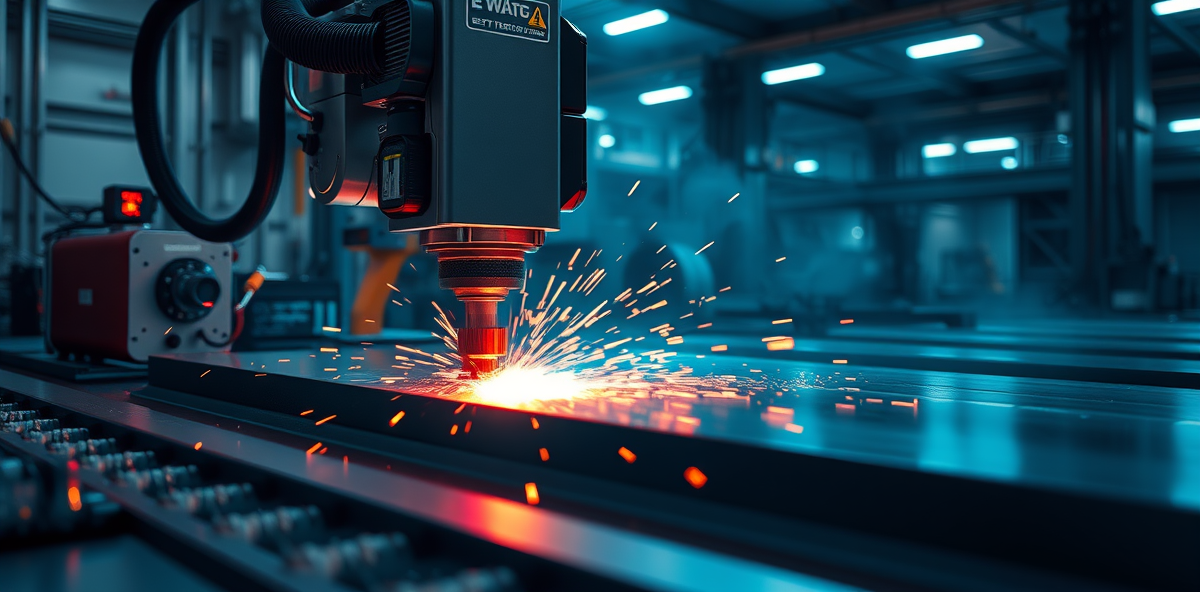
This is arguably the most prominent application. Fiber laser cutting excels at cutting various metals, including stainless steel, carbon steel, aluminum, brass, and copper, with exceptional speed and accuracy. Industries such as automotive, aerospace, and general fabrication rely heavily on metal laser cutting for producing complex parts with smooth, burr-free edges.
-
Laser Welding
Fiber laser welding machines provide deep, narrow, and strong welds with minimal heat input, reducing distortion and post-processing. This is critical in automotive body-in-white production, medical device manufacturing, and electronics where precision and material integrity are crucial.
-
Marking and Engraving
Fiber lasers are ideal for high-speed, permanent marking and engraving on metals, plastics, and ceramics. This includes serial numbers, barcodes, logos, and intricate designs, vital for traceability and branding in industries from electronics to jewelry.
-
Cladding and Surface Treatment
Laser cladding uses fiber lasers to apply wear-resistant or corrosion-resistant layers to metal surfaces, extending the lifespan of components. This application is particularly valuable in heavy machinery, oil and gas, and aerospace industries.
-
Drilling
Fiber lasers can drill extremely small and precise holes in a wide range of materials, often used in aerospace for turbine components or in medical for micro-drilling applications.
Benefits of Fiber Laser Technology
The adoption of fiber laser technology brings a multitude of advantages that directly impact a manufacturer’s bottom line and operational efficiency. These benefits are why more companies are investing in laser cutting machines and laser welding machines.
-
Superior Beam Quality and Precision
Fiber lasers produce a high-quality beam with a small focal spot, leading to extremely fine and precise cuts or welds. This results in superior edge quality in fiber laser cutting and stronger, cleaner welds, reducing the need for secondary finishing operations.
-
High Processing Speed
For thin to medium-thick materials, fiber lasers offer significantly faster cutting and welding speeds compared to traditional methods. This increased throughput directly translates to higher production volumes and shorter lead times, especially in metal laser cutting.
-
Energy Efficiency
Fiber lasers boast high electrical-to-optical conversion efficiency, often exceeding 30%. This means they consume less power than CO2 lasers, leading to substantial energy cost savings over time and a reduced environmental footprint.
-
Low Maintenance and High Reliability
With no moving parts in the beam path and a robust, solid-state design, fiber lasers require minimal maintenance. This significantly reduces downtime, enhances operational reliability, and lowers long-term ownership costs.
-
Versatility Across Materials
While excellent for metals, fiber lasers can also process a range of non-metallic materials, although metal laser cutting remains their primary strength. This versatility allows manufacturers to handle diverse job requirements with a single piece of equipment.
-
Compact Footprint
Their compact design allows for easier integration into existing factory layouts, making optimal use of valuable floor space. This is a significant advantage for facilities with limited room.
Comparison with Traditional Cutting and Welding
To fully appreciate the impact of fiber laser technology, it’s helpful to compare it against conventional material processing methods. The distinctions highlight why modern manufacturers are increasingly turning to laser solutions.
Cutting Technologies: Fiber Laser vs. Plasma/Oxy-fuel/Mechanical
-
Speed and Precision
Fiber laser cutting is significantly faster than plasma and oxy-fuel cutting for thinner to medium-thick metals, offering superior edge quality and virtually no dross. Mechanical cutting (e.g., punching, shearing) can be fast but lacks the flexibility for intricate shapes and internal cuts that a laser cutting machine provides.
-
Material Range
While plasma and oxy-fuel are limited to conductive and ferrous metals respectively, fiber laser cutting handles a broader spectrum, including highly reflective materials like copper and brass, which are challenging for other methods. This makes metal laser cutting highly advantageous.
-
Heat Affected Zone (HAZ)
Fiber laser technology creates a much smaller HAZ compared to plasma and oxy-fuel, minimizing material distortion and preserving the integrity of the workpiece. This is crucial for high-tolerance components.
-
Operating Costs
Although the initial investment for a laser cutting machine can be higher, lower energy consumption, reduced consumable costs, and minimal post-processing often lead to lower overall operating costs for fiber laser cutting.
Welding Technologies: Fiber Laser vs. Traditional Arc Welding (MIG/TIG)
-
Weld Quality and Speed
Fiber laser welding machines produce deep, narrow, and exceptionally strong welds at very high speeds. Traditional MIG/TIG welding, while versatile, is generally slower and creates wider weld beads with more heat input, potentially leading to greater distortion.
-
Heat Input and Distortion
The highly focused beam of a fiber laser welding machine significantly reduces the heat affected zone, minimizing material distortion and the need for post-weld straightening or machining.
-
Automation Potential
Both fiber laser cutting and laser welding machines are highly amenable to automation, easily integrating into robotic systems for consistent, repeatable results and increased productivity in high-volume manufacturing.
How to Choose the Right Laser Equipment
Selecting the ideal laser cutting machine or laser welding machine is a critical decision that impacts your manufacturing capabilities and profitability. A careful evaluation of your specific needs and the equipment’s specifications is essential.
Key Considerations for Industrial Buyers
-
Material Type and Thickness
Different lasers are optimized for different materials and thicknesses. For metal laser cutting, fiber lasers are excellent, but ensure the power output matches the maximum thickness you plan to cut regularly.
-
Power Output
Higher power generally means faster cutting/welding speeds and the ability to process thicker materials. However, it also means higher initial cost. Balance power requirements with your production volume and material specifications.
-
Beam Quality
For fine features and high precision, a machine with excellent beam quality is crucial. This directly affects the kerf width in cutting and the penetration in welding.
-
Work Area Size
The dimensions of the machine’s work table should accommodate the typical size of your raw materials and finished parts. Consider automated loading/unloading systems for higher throughput.
-
Automation and Integration
Assess how easily the laser cutting machine or laser welding machine can be integrated into your existing production line, including software compatibility and robotic capabilities.
-
Budget and ROI
While the initial investment can be significant, consider the long-term return on investment from increased efficiency, reduced material waste, and lower operational costs.
-
Service and Support
Reliable after-sales service, technical support, and spare parts availability are vital for minimizing downtime and ensuring continuous operation.
Why Choose Lemon Laser?
When investing in advanced fiber laser technology, choosing a reputable partner like Lemon Laser is paramount. Lemon Laser specializes in delivering high-performance laser cutting machines and laser welding machines designed to meet the rigorous demands of industrial manufacturing.
Our commitment to innovation, quality engineering, and exceptional customer support ensures that you receive equipment that not only performs at peak efficiency but also provides lasting value. With Lemon Laser, you gain a partner dedicated to helping you maximize your production capabilities and achieve your operational goals through state-of-the-art fiber laser technology.
Maintenance and Operational Tips
To ensure your fiber laser technology equipment continues to operate at peak performance and delivers consistent results, regular maintenance and adherence to best operational practices are essential. Proactive care can significantly extend the lifespan of your laser cutting machine or laser welding machine and minimize unexpected downtime.
-
Regular Cleaning of Optics
Though fiber lasers have a sealed beam path, the protective cover glass and nozzles at the cutting head should be cleaned regularly to prevent contamination, which can degrade beam quality and cause power loss. Use approved cleaning solutions and methods.
-
Check Cooling System
The chiller system is crucial for maintaining the optimal operating temperature of the laser source. Regularly check coolant levels, water quality, and ensure the chiller filters are clean. Any issues with cooling can severely impact laser performance and longevity.
-
Inspect Nozzles and Consumables
For fiber laser cutting, frequently inspect and replace worn nozzles. Damaged nozzles can lead to poor cut quality and inefficient gas usage. Ensure the correct type and size of nozzle are used for each application.
-
Maintain a Clean Environment
A clean operating environment free from dust, debris, and fumes is vital. Particulate matter can settle on optics or enter the machine, potentially causing damage. Ensure proper ventilation and dust extraction systems are in place.
-
Software Updates and Calibration
Keep your machine’s software updated. Periodically check and calibrate the beam alignment and focus according to the manufacturer’s guidelines to ensure optimal precision and efficiency.
-
Operator Training
Ensure all operators are thoroughly trained in machine operation, safety protocols, and basic troubleshooting. Well-trained personnel are key to efficient and safe machine utilization.
Future of Laser Technology in Manufacturing
The trajectory of fiber laser technology in manufacturing points towards even greater sophistication, integration, and expanded capabilities. As research and development continue, we can anticipate a future where laser processes are even more intelligent and efficient.
One major trend is the increasing integration of artificial intelligence (AI) and machine learning (ML) for process optimization. AI-powered systems can monitor parameters in real-time, predict maintenance needs, and even adapt cutting or welding strategies dynamically to achieve superior results. This will further enhance precision and reduce waste.
Advancements in higher power fiber lasers will enable the processing of even thicker and more challenging materials at unprecedented speeds. We also expect to see the development of multi-wavelength lasers, offering greater versatility for processing diverse material combinations. Furthermore, the role of fiber laser technology in additive manufacturing (3D printing) is set to expand, enabling the creation of complex geometries with high material integrity.
The push towards greater automation and Industry 4.0 integration will solidify the position of laser cutting machines and laser welding machines as central components of smart factories. This future promises not just incremental improvements but transformative shifts in how products are designed, manufactured, and delivered globally.
Conclusion
Fiber laser technology has unequivocally revolutionized the manufacturing industry, setting new benchmarks for precision, speed, and efficiency. From fiber laser cutting to advanced welding and marking, its applications are broad and its benefits profound.
For engineers, factory owners, and manufacturing companies, embracing this technology is not just about adopting a new tool; it’s about investing in a competitive advantage. The ability to produce high-quality parts faster, with less waste and lower operational costs, positions businesses for sustainable growth in an increasingly demanding market.
By carefully considering your operational needs and partnering with a trusted provider like Lemon Laser, you can harness the full potential of fiber laser technology. The future of manufacturing is undeniably laser-powered, and understanding its capabilities is the first step towards transforming your production capabilities.